
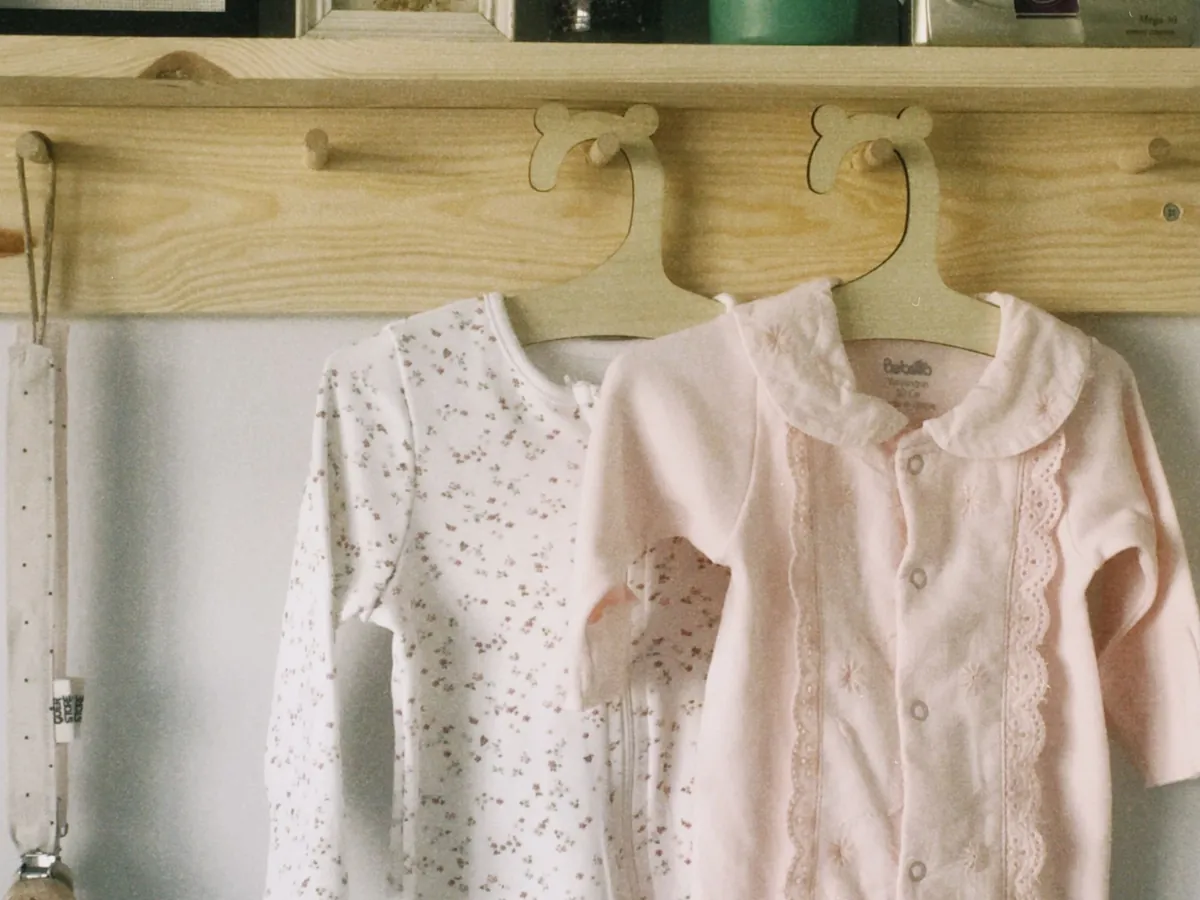
How to store outgrown baby clothes
Outgrown baby clothes arrive faster than any other category of clothing in the house. If you are keeping them for a younger sibling, for friends, or because you are not ready to decide, they need a system: clean, dry, sorted by size, and stored somewhere that is not the current child’s wardrobe. The current wardrobe should hold what fits now. Everything else should be packed so you can find “9–12 months” in one go, a year from now, without opening five mixed bags.
This is desk research, not a hands-on test. We compared published dimensions and features from retailer listings, and we point you to our ranked kids’ wardrobe and nursery storage list and our under-bed storage list when you are ready to choose a model. Prices change, so use the product links to check the current price.
Affiliate disclosure: We may earn a commission if you buy through links on this page, at no extra cost to you. As an Amazon Associate I earn from qualifying purchases. IKEA links are not affiliate links. Read our full disclosure.
Sort before you pack: keep, pass on, let go
Do this on the bed, in size order, not in a hurried bag at the back of the wardrobe.
- Keep if you are reasonably sure you will use the size again, or if the item is special and you want it as a keepsake. Keepsakes should be a very small pile: a coming-home outfit, a hand-knit, perhaps one babygrow. A whole suitcase of sentiment becomes a guilt box.
- Pass on anything clean, in good condition, that you will not use. Friends, family, a local parent group or a charity shop will take it faster if it is already sorted by size.
- Let go of anything stained, bobbled, stretched or with poppers that no longer hold. There is no kindness in passing on a worn-out vest.
Wash and fully dry everything you keep. Tightly packing even slightly damp cotton is how you get musty clothes and, in the worst case, mildew. Do not iron if you do not want to; do make sure items are dry to the middle of a folded stack.
If you are also trying to make a small current wardrobe work, sort the in-use clothes at the same time. Our guide to organising kids’ clothes in a small wardrobe covers rails, drawers and hangers for what they wear now.
Pack by size, then by season
The only label that really matters on a baby-clothes box is the size. “0–3 months”, “3–6”, “6–9”, “9–12”, “12–18” and “18–24” is enough. If you also want a season, write it second: “6–9 months, winter”.
Do not mix sizes in one bag because you have space left. The whole point is that, when you need 9–12 months, you pull one container.
A simple packing order that works:
- Fold vests, bodysuits and sleepsuits in one stack.
- Fold day outfits in another.
- Keep hats, mittens and the tiny accessories in a small pouch or one of a set of drawer organisers, so they do not vanish to the bottom.
- Put shoes and soft-soled pram shoes in a separate small bag; they can mark fabric and they hold their shape better if they are not crushed under a pile of cotton.
The DIMJ 12-pack of fabric drawer organisers on our nursery list (listed at 30 x 30 x 9, 30 x 15 x 9 and 15 x 15 x 9 cm) is meant for in-use drawers, but a couple of the smaller ones can sit inside a larger storage box to keep socks and vests together. Use them if you already have them; do not buy a complex system just for stored baby clothes.
Choose boxes or bags you can actually lift and label
For most UK homes, under the bed, on top of a wardrobe, or in a cupboard is more realistic than the loft, at least for the next size up. You may need those clothes with little notice.
Practical options from our shortlists:
- Clear, lidded plastic boxes so you can see the contents and stack them. The Wham Crystal 25 L boxes (42.5 x 33 x 25.5 cm each, pack of five, UK-made according to the listing) are a good size for one or two baby sizes. The Really Useful 64 L box, listed at 71 x 44 x 31 cm, suits a larger “next year” stash, but check you can lift it when full and that it will go on the shelf you have in mind.
- Under-bed bags or boxes if the spare room is tight. The SONGMICS under-bed bags are listed at 82 x 40 x 15 cm, low enough for many frames, with a clear window. The IKEA SKUBB case (editorial link) is listed at 90 x 53 x 19 cm and folds flat when you do not need it. Measure clearance first; see under-bed storage.
- Vacuum bags only for bulky items you are sure you can let be compressed: a snowsuit, a spare duvet, a thick outdoor pram suit. The Amazon Basics vacuum bags with hand pump, jumbo, 6-pack are listed at 100 x 76 cm each when flat, and they work with the hand pump or a vacuum cleaner according to the listing. They are our budget pick on the under-bed list for shrinking winter bedding. For everyday baby cottons, a vacuum bag is often unnecessary, and over-compressing for a long time can leave deep creases. Do not vacuum anything delicate, padded or structured without checking care advice, and never store a vacuum bag where it might stay damp.
Label the end of the box that faces you, in large letters. Add the date you packed it. If you have more than one child planned, a simple list on your phone of “what is in the 12–18 box” can help, but the large label on the box is the bit you will actually use.
Where to keep the boxes in a small home
The next size up should be easy to reach: under the cot or bed, on top of the current wardrobe, or on a high but accessible cupboard shelf in the nursery. You will want it in a hurry when a growth spurt lands in the same week as a cold snap.
Sizes further ahead can go in a spare wardrobe, under a bed in another room, or in a dry loft in proper lidded boxes, off the floor. Lofts in UK houses can be cold, dusty and sometimes damp. Use robust boxes with lids, not open bags, and avoid lofts if you already know yours has a condensation problem.
Do not leave a mixed “baby clothes” sack on the wardrobe floor of the current child’s room. It steals space from what they wear now, and it will be in the way every morning. The current wardrobe — whether that is an Argos Home Juno, an IKEA SMÅSTAD / PLATSA (editorial link), or a compact URBNLIVING 130 cm wardrobe — should hold this season’s clothes only.
If you need more in-room storage for the clothes they wear now, hanging organisers and small chests on our nursery storage list are the right tools. Saved baby clothes are a packing job, not a second wardrobe.
A once-a-season habit
When you change the current child’s clothes at the start of summer or winter, spend twenty minutes on the stored boxes too. Move the next size into the easy-to-reach spot, check for damp, and let go of anything you have now decided not to keep. Stored clothes are not a museum. The system stays kind if it stays small.
FAQs
How should I store baby clothes in the UK for a second child?
Wash and dry them, sort strictly by size, pack in labelled lidded boxes or under-bed cases, and keep the next size somewhere you can reach without a loft ladder. Leave the current wardrobe for clothes that fit now.
Can I use vacuum bags for baby clothes?
They can help with bulky snowsuits and spare bedding. For everyday cottons they are usually unnecessary, and long, tight compression can crease clothes. Keep bags dry, and check care advice for anything padded or delicate. See our winter clothes under the bed guide for the same idea with adult bedding.
Where is the best place to store outgrown baby clothes in a small house?
Under a bed or on top of a wardrobe for the next size, and a dry, lidded box in a cupboard or loft for sizes further ahead. Avoid mixed sacks on the nursery floor.
How long can I store baby clothes?
Clean, dry clothes in a lidded box will keep perfectly well from one child to the next. Re-check once a year for damp or moths, and be honest about items you will never use.
Should I store clothes hanging up?
Not usually, for outgrown baby sizes. They take too much rail space. Hang only the current child’s dresses, coats and the few items that crease badly, and pack the rest.