Shoe storage bench for kids
A shoe storage bench for kids earns its space because it does two jobs at the door: it hides or holds shoes, and it gives a small person somewhere to sit while they put them on. In a typical UK hallway that is already tight, that second job is often the difference between a calm school-run and a pile of trainers in the walkway.
This is desk research, not a hands-on test. We compared published dimensions and features from retailer listings, and we point you to our ranked hallway storage list when you are ready to choose a specific model. Prices change, so use the product links to check the current price.
Affiliate disclosure: We may earn a commission if you buy through links on this page, at no extra cost to you. As an Amazon Associate I earn from qualifying purchases. IKEA links are not affiliate links. Read our full disclosure.
Why a bench often works better than a cabinet for young children
A slim flip-drawer cabinet is usually the best answer if you only need to hide shoes in a narrow hall. We cover that in best shoe storage for a narrow hallway. For toddlers and early primary-age children, a bench can still be the more practical daily tool.
Children rarely load a tip-front drawer neatly. They will sit on the floor, on the bottom stair, or on a parent’s knee. A padded or flat seat at the right height lets them do up Velcro or wait while you find a coat, and it keeps the doorway clearer. A bench also gives you a natural “landing zone”: bags can rest beside someone sitting down, rather than being dumped in the middle of the floor.
The trade-off is depth and capacity. Benches are usually deeper than the slimmest cabinets, and the storage underneath holds fewer pairs. If adults’ size 9+ boots need to live by the door as well, you may want a bench for the children and a very slim cabinet for the rest, or a combined coat-and-shoe unit if the hall is wide enough. Our coats and shoes guide looks at that full system.
Measure the hall and the child before you shop
Four measurements matter more than the “holds eight pairs” claim on the box.
1. Walkway left over. Measure the width of the hall at the tightest point, then subtract the depth of the bench. You still need a clear path for a pushchair, a child in a coat, or someone carrying shopping. As a rule of thumb, many families find that 70–80 cm of clear walkway feels comfortable; less than 60 cm starts to feel like a squeeze. These are planning figures, not building regulations.
2. Depth of the bench. This is the figure that makes or breaks a narrow hall. On our hallway shortlist, the SoBuy FSR82-L-W shoe bench is listed at 24 cm deep, the VASAGLE coat rack with shoe bench at 32 cm, and the Kempton 2-tier shoe storage bench (sold by Dunelm) at 34 cm. Ten centimetres of extra depth is the difference between a comfortable pass and a daily sideways shuffle.
3. Seat height. A bench that is comfortable for an adult may leave a four-year-old’s feet dangling, which is fine for a brief perch but less helpful for putting on shoes. Check the listed height and picture your child sitting on a similar-height dining chair or stair tread. The SoBuy bench is listed at 51 cm high, the Kempton at 56 cm, and the VASAGLE combination at 175 cm overall, with the bench as the lower section of a tall coat stand.
4. The shoes you actually store underneath. Advertised pair counts usually assume smaller or flatter shoes packed neatly. Chunky trainers, school shoes with thick soles, and wellies take more room. The SoBuy listing describes about six pairs hidden below, and notes it can be tight for men’s shoes. If the children’s everyday pairs are the only ones that need to live at the door, that capacity is often enough. Spare and out-of-season shoes can go elsewhere, including under the bed.
Also measure the length of wall you can use, and check for skirting boards, radiators, the way the front door opens, and sockets. Leave room for the door to swing past the seat.
The main types of kids’ shoe bench
Flip-drawer benches
These hide the shoes behind a tip-front drawer, with a cushion or a flat top to sit on. They look tidy in a hall that guests walk through, and they stop a toddler emptying a row of open cubbies for fun.
The SoBuy FSR82-L-W is the dedicated bench on our hallway list: 75 x 24 x 51 cm, with a padded seat and a flip drawer. At 24 cm deep it is one of the slimmer seated options we found in the listings, which is why it suits a narrow family hall if the pair count is modest. Because the shoes sit on a slant, check the listing for any stated maximum shoe size before you assume adult trainers will fit.
The downside of a flip drawer is the same as on a tall cabinet: it is fussy about how you load it, and a very young child will need help at first. Once they can open it carefully, it becomes a clear “shoes live here” rule.
Open cubby benches
An open bench with cubbies or shelves is easier for children to use on their own. They can see the pair they want and put them back without operating a mechanism. The visual trade-off is obvious: the shoes are on show, and cubbies fill with school bags if you do not set a rule.
The Kempton 2-tier shoe storage bench is listed at 97 x 34 x 56 cm, with eight open cubbies and a padded seat. It is deeper than most of the closed cabinets on our list, so measure the walkway twice. If you have the depth, the open cubbies are genuinely child-friendly.
If you only need a simple rack and can sit on a stair instead, the SONGMICS 4-tier shoe rack is listed at 45 x 28 x 80 cm for about eight pairs, with an anti-tip kit according to the listing. It is not a bench, but it can sit beside a low wall-mounted hook rail if floor width is tight.
Combined coat rack and shoe bench
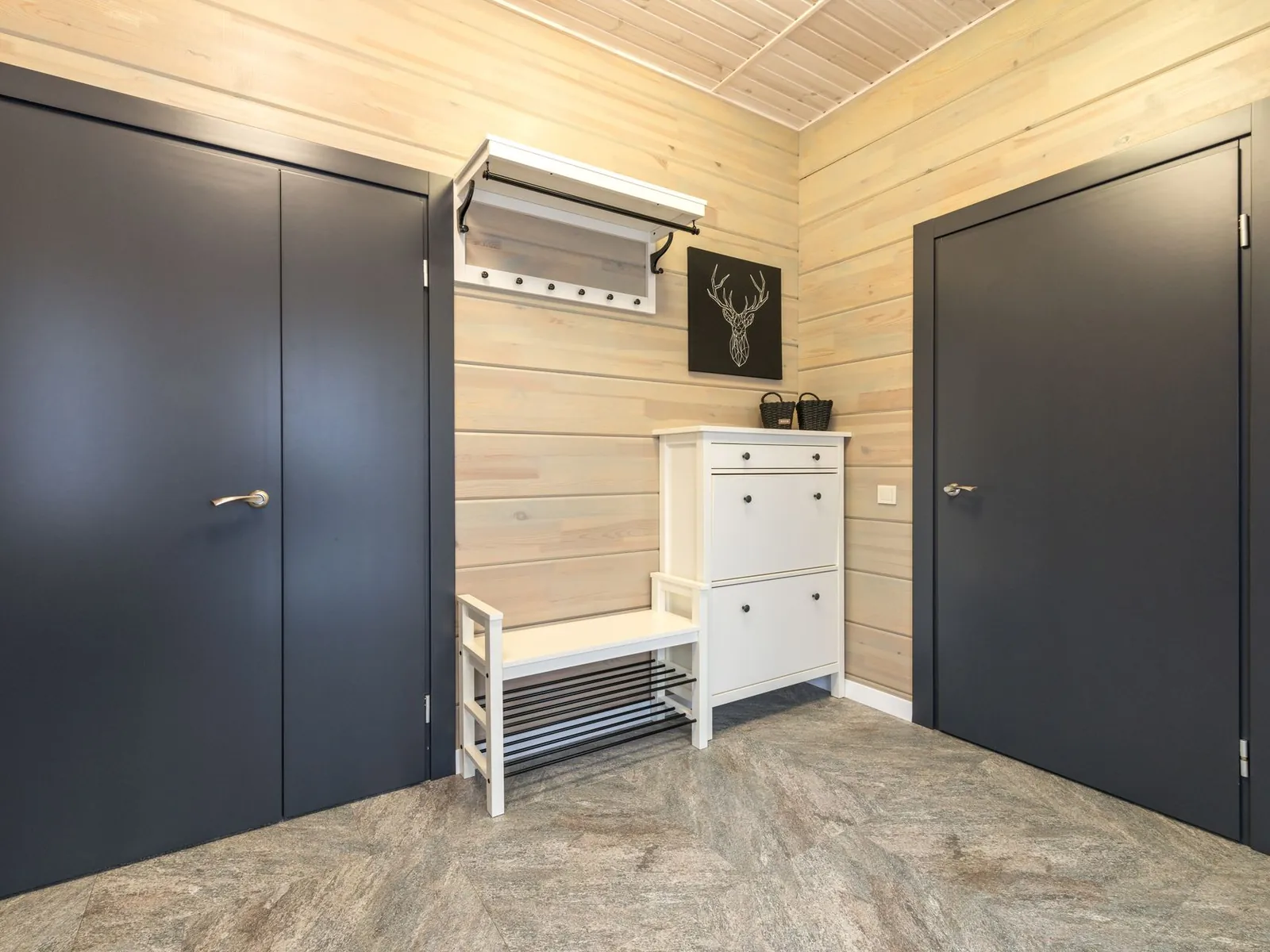
If coats, bags and shoes all pile up in one spot, a combined unit can be calmer than three separate pieces. The VASAGLE HSR041B41 is our number one hallway pick: 70 x 32 x 175 cm, with nine hooks on two rows, shelves, and a shoe bench at the base. The width is modest; the depth is 32 cm, so it is not the slimmest option, but it keeps the whole arrival zone in one footprint.
A combined unit only works if you can fix it securely. Tall coat stands are inviting to climb. Use the wall anchor the listing includes, and keep heavier coats on the lower hooks where possible so the weight sits lower.
If you would rather keep the floor almost clear and hang coats separately, a wall-mounted rail such as the VASAGLE LCR101B02 (listed at 65 x 30 x 42 cm) can sit above a low bench.
Safety, stability and daily use
Treat any hallway bench as furniture that children will sit on, climb on and push. Check the listing for a stated weight limit for the seat, and do not let it become a step-stool for reaching high hooks.
Fix taller units and open racks to the wall with the anti-tip kit. On a combined coat-and-bench unit, this is not optional. Even a low bench can slide on a smooth floor if it is not against the wall or on a non-slip mat, which is a problem when a child sits down hard to take off boots.
Keep the rule simple enough for a weekday morning: everyday school shoes and one pair of trainers live in the bench; wellies and spare shoes go in a crate or under a bed. If the bench is stuffed, children will not use it.
If the hall is a muddy boot zone, a wipe-clean seat is easier than a pale fabric cushion — check the cover details on the listing rather than assuming it is removable.
When a bench is the wrong buy
Skip a bench if the hall is so narrow that even a 24 cm-deep unit would leave an awkward walkway. In that case a 17 cm-deep cabinet such as the GFW narrow 4-drawer shoe cabinet or the IKEA STÄLL (IKEA link is editorial only) will serve you better, and a child can sit on the bottom stair instead.
Also skip it if you need to store a large number of adult shoes by the door. A bench is a children’s and everyday-pair tool, not a 16-pair cabinet. The SoBuy FSR79-W, listed at 105 x 24 x 83 cm, is the high-capacity closed option on our hallway list if capacity is the real problem.
If the hall is very tight, start with our guide to how to organise a small hallway. Spare pairs that do not need to live by the door are often better in under-bed shoe storage.
FAQs
What is the best shoe storage bench for kids in a narrow hallway?
The slimmest dedicated bench on our shortlist is the SoBuy FSR82-L-W, listed at 24 cm deep with a padded seat and a flip drawer. Measure the walkway you would have left before you buy, and check today’s listing for capacity and any maximum shoe size.
How deep should a kids’ shoe bench be?
As shallow as you can go while still fitting the shoes you store and leaving a clear walkway. Closed benches on our list start around 24 cm deep; open cubby benches can be closer to 34 cm.
Should the bench also hold coats?
Only if you have the depth and can fix a tall unit to the wall. A combined coat rack and shoe bench keeps everything in one zone, but it is usually deeper and taller than a simple bench. Otherwise, use wall hooks above or beside the seat.
Can a toddler use a flip-drawer bench?
They will need help at first, and you should check that the drawer cannot pinch fingers in normal use. Open cubbies are easier for very young children; closed drawers stay tidier once they can manage them.
Do I still need a slim shoe cabinet?
You might. A kids’ bench often holds only the everyday pairs. A slim cabinet, or under-bed storage for spare shoes, can take the overflow so the bench stays usable.