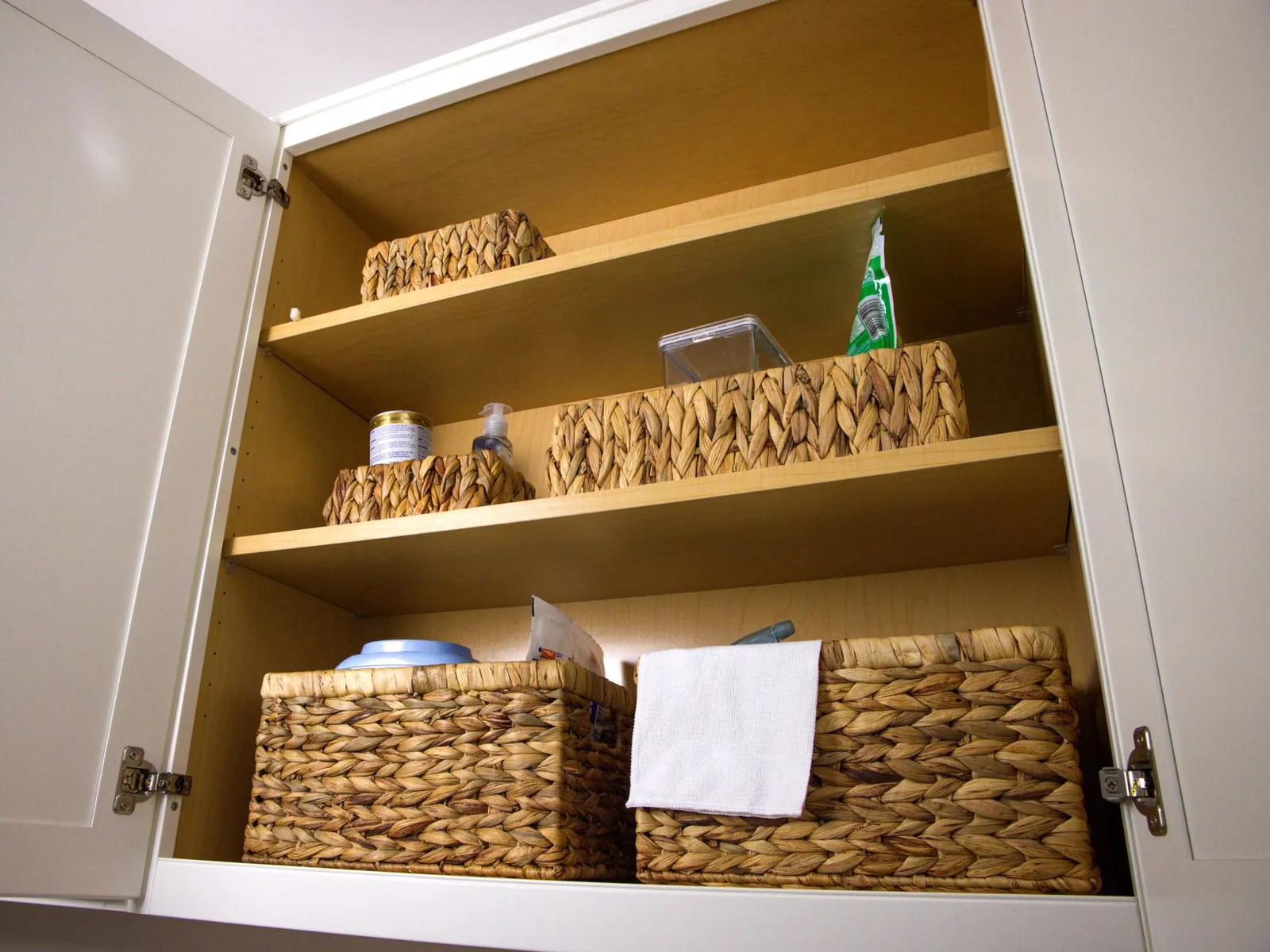
How to organise a small kitchen with few cupboards
A small kitchen with few cupboards is usually a UK galley, a flat kitchen, or a family room where the cupboards were planned for two people and now feed four. The answer is not to cover every surface with more containers. It is to make every shelf work twice, to stop packets sprawling, and to keep daily items within one movement of where you cook.
This is desk research, not a hands-on test. We compared published dimensions and features from retailer listings, and we point you to our ranked kitchen and pantry storage list when you are ready to choose a model. Prices change, so use the product links to check the current price.
Affiliate disclosure: We may earn a commission if you buy through links on this page, at no extra cost to you. As an Amazon Associate I earn from qualifying purchases. IKEA links are not affiliate links. Read our full disclosure.
Empty, edit, then measure the shelves
Take everything out of one cupboard at a time. Throw away the stale, donate the duplicates, and be honest about the gadgets you do not use. A small kitchen cannot afford a waffle maker that comes out once a year to live on a useful shelf.
Then measure: shelf width, depth and the clear height between shelves. Note the hinge side of the door, any central stile, and whether the cupboard is shallow (typical wall cupboards) or deep (many floor cupboards). Deep cupboards have a different problem — things get lost at the back — which we cover in how to organise deep kitchen cupboards. This guide is about making a small total volume feel enough.
Group what remains into daily, weekly and rare. Daily items deserve the easiest shelf, between waist and eye height. Rare items can go higher, lower, or into a box in another room (spare party platters do not need to live next to the breakfast bowls).
Make one shelf do the work of two
A shelf insert is the cheapest way to add space without new cupboards. The IKEA VARIERA shelf insert (editorial link) is listed at 45.5 x 14 x 16 cm, a simple riser for mugs, bowls or tins. Measure your shelf depth first: 14 cm is shallow, which is why it suits many wall cupboards without blocking the door.
If you need something that stretches to the width you have, the Lifewit expandable cupboard shelf organiser is listed at 29.9 to 40 cm wide, 21 cm deep and 18 cm high, with non-slip feet, and a stated capacity of up to 15 kg according to the listing. Confirm those figures on the current page, and check that the height will still leave room for the items on the shelf above.
The Joseph Joseph Duo 2-tier cupboard organiser with drawer is listed at 26.5 x 18.5 x 17.5 cm (D x W x H on the listing). It lifts tins and jars at the back so you can see them, and has a pull-out drawer for packets. It is a good everyday unit for a small food cupboard, provided the depth fits.
Do not double-stack heavy casserole dishes on a lightweight riser. Use inserts for mugs, glasses, tins and spices; keep the heavy bakeware on a solid shelf.
Get the back of the cupboard back into use
In a small kitchen, the back of a deep floor cupboard often becomes a grave for spare sauces. A wheeled caddy solves that without a bigger room.
The Joseph Joseph CupboardStore 2-tier wheeled storage caddy is listed at 47 x 20 x 33.5 cm (D x W x H as given on the listing), with two tiers and pull handles. It rolls out so you can reach the back. Measure the cupboard opening, not just the interior: a caddy is useless if it cannot pass the door frame or a central stile.
For corner cupboards, a turntable is usually better than a caddy. The Amazon Basics 2-tier lazy Susan, listed at 22.9 x 22.9 x 19.5 cm, is our budget pick on the kitchen list: spin to reach oils, sauces or spices. It also works in a fridge door-side shelf if the height allows. Check the current diameter against your shelf.
Decant the foods you buy every week
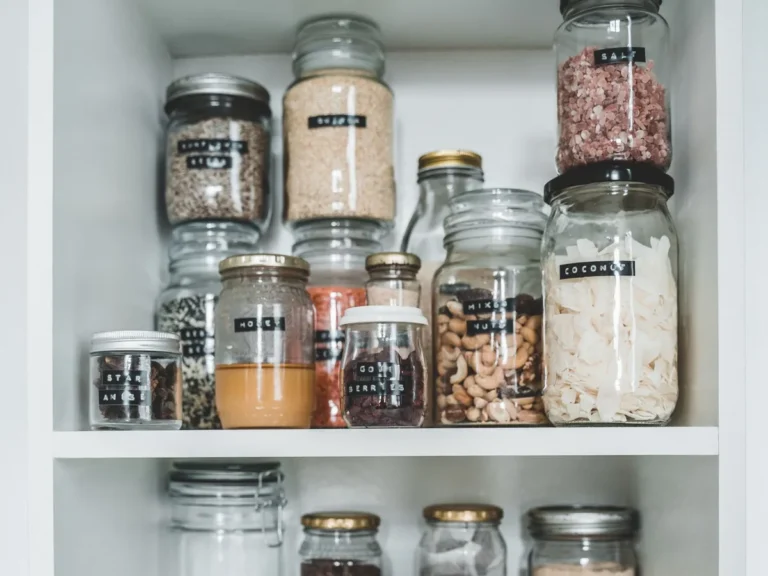
Half-open cereal bags and slumping pasta packets waste space and spill. Square, stackable containers turn a messy shelf into a predictable block of food.
The OXO Good Grips 5-piece POP set is our number one kitchen pick: push-button airtight lids, square shapes that stack, and dishwasher-safe according to the listing, in 1.9 L, 1.4 L, two 851 ml and one 283 ml sizes. You can add more sizes from the same range later. We compare container types in best airtight food storage containers.
If you prefer glass, the Kilner Fresh set of four (0.5 L, 1 L, 1.5 L and 2 L) is a plastic-free, stackable option on our list. Glass is heavier and less forgiving on a high shelf with small children about.
A lower-cost plastic set such as the Good Food 4-piece airtight set at Argos (3.2 litres total according to the listing) can be enough if you only need to tame breakfast foods. Do not buy five different systems; one family of lids is easier to live with.
Decant only what you use often. A single-use bag of risotto rice can stay in a slim clip box or a labelled bag file. The aim is to shrink the bulky weekly staples.
Steal space that is not a shelf
Small kitchens have unused strips of air:
- Under a shelf. The Joseph Joseph CupboardStore under-shelf film, foil and bag organiser is listed at 26.3 x 22 x 9 cm and fixes under a shelf with 3M tape, according to the listing, so it uses no shelf space. Check that the tape is suitable for your shelf finish, and that the door still closes.
- The inside of a door, for a narrow spice rack or a lid organiser, only if the door will still shut and the rack cannot rain its contents when opened quickly.
- A drawer, for spices, if you have one to spare. A Lifewit 4-tier spice drawer organiser can free a whole cupboard shelf of small jars. (We cover this properly in a dedicated spice-drawer guide once it is published; for now, see the kitchen shortlist.)
- The fridge and a worktop only as a last resort. A turntable in the fridge is useful; a permanent city of jars on a small worktop is how prep space disappears.
Do not add a large countertop “kitchen organiser” until the cupboards are working. In a small room, worktop is the most valuable surface you have.
A simple everyday layout
A layout that works in many compact family kitchens:
- One shelf of stacked airtight containers for cereal, pasta, rice and tea.
- One shelf of tins and jars on a riser or two-tier organiser, labels facing forward.
- A caddy or turntable for oils, sauces and vinegars.
- Mugs and glasses on a shelf insert in a wall cupboard, near the kettle.
- Pans in the deepest floor cupboard, lids in a rack or on a pan lid organiser, not piled in a dangerous stack.
- Rarely used serving dishes in a high cupboard or, if needed, in a box elsewhere in the home.
Reset one cupboard whenever it starts to slip, not the whole kitchen at once.
If spices are the main jumble, a dedicated tray can work better than a cupboard shelf; see our spice drawer organiser UK guide. The cupboard under the sink is a different problem; we cover that in the best under-sink storage organisers.
FAQs
How can I organise a small kitchen with very few cupboards?
Edit what you own, then add height with shelf inserts, decant bulky foods into stackable containers, and use a caddy or turntable so the back of each cupboard is reachable. Keep the worktop as clear as you can.
What should I buy first?
A shelf insert and a small set of airtight containers usually do more than a new gadget. Measure shelves before you buy, and check current listings for sizes.
How do I add storage without fitting new cupboards?
Use risers, under-shelf organisers, door racks if the door still closes, and a turntable in corners. Our kitchen storage shortlist has scored options for each of those jobs.
Is it worth decanting everything?
No. Decant the weekly staples that currently sprawl. Leave occasional foods in tidy bags or a single clip box so you do not spend your life washing jars.
Where should I put spices in a small kitchen?
In a drawer organiser if you have a spare drawer, or on a turntable or a shallow shelf at the front of a cupboard. Avoid a deep row of jars that hides the ones at the back.