Toy rotation storage ideas
Toy rotation is a simple idea: only a portion of the toys are out at once, and the rest wait in closed storage. Children often play more calmly with a smaller set, and a small UK living room or bedroom is easier to reset at the end of the day. You do not need a special “rotation system” product. You need a clear split between the toys in use and the toys at rest, and containers you will actually open when it is time to swap.
This is desk research, not a hands-on test. We compared published dimensions and features from retailer listings, and we point you to our ranked toy storage list when you are ready to choose a model. Prices change, so use the product links to check the current price.
Affiliate disclosure: We may earn a commission if you buy through links on this page, at no extra cost to you. As an Amazon Associate I earn from qualifying purchases. IKEA links are not affiliate links. Read our full disclosure.
How toy rotation works in a family home
Start by gathering the toys into groups that make sense to a child: cars, animals, building sets, dressing-up, dolls, puzzles, and so on. Then choose how many groups will be “out” at the same time. In a small living room, two or three categories plus the comfort toys that never go away is plenty. The rest go into lidded boxes that live out of the main room.
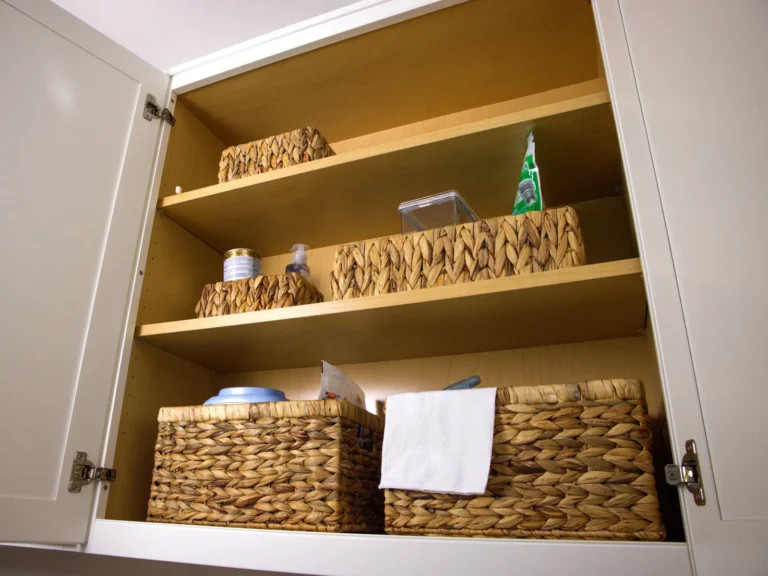
A rotation is not a punishment cupboard. The stored toys should be in good condition, clean, and easy to bring back. If a box is in the loft behind the Christmas decorations, you will never swap it. Under-bed, a high cupboard, or a top wardrobe shelf in the same room is more realistic.
Keep a permanent core out of the rotation: the favourite soft toy, the current bedtime books, and any set your child is deep in the middle of (a half-built Lego model should not be packed away mid-project). We have a separate guide to Lego storage, because many-pieced sets need their own containers.
Parents on forums talk about swapping every one or two weeks. That is a useful starting point, not a rule. A shorter rotation helps if your child is bored quickly; a longer one helps if packing up causes upset. The storage should make either rhythm easy.
What belongs in the “out” set
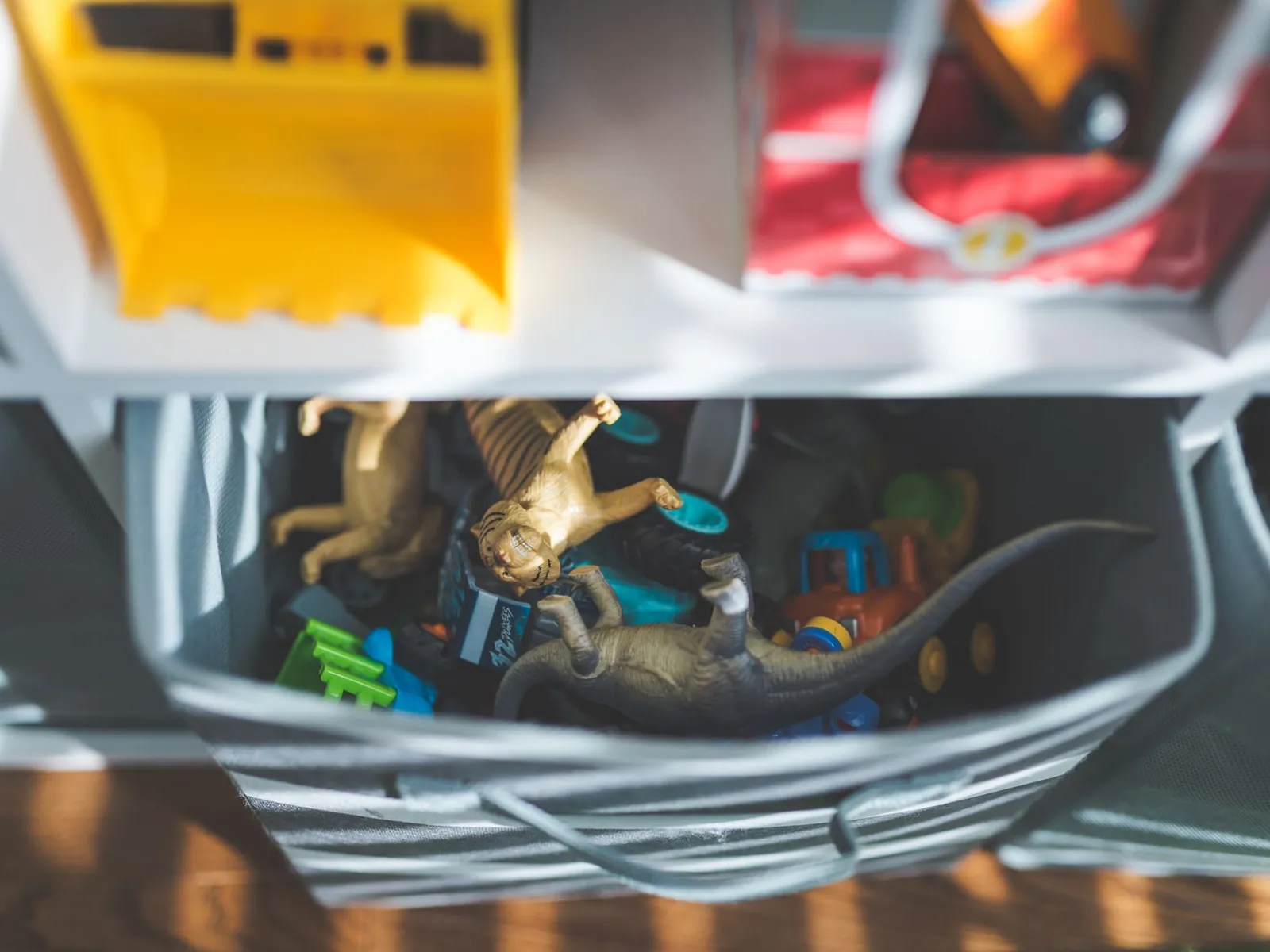
The toys on display should live in storage children can see into and carry. Deep chests and anonymous fabric baskets become a jumble, which defeats the point of a smaller set.
A low organiser with lift-out bins is the usual living-room or bedroom answer. The Amazon Basics kids toy storage organiser with 12 plastic bins is our number one toy-storage pick. The listing gives measurements of 85.3 x 27.7 x 79 cm, with a frame that anchors to the wall according to the listing. You do not have to fill all twelve bins. Use three or four for the current rotation, and the rest for books, colouring, or household bits if that helps the unit earn its floor space.
The Argos Home kids 4-tier basket unit is a similar idea at a listed 86 x 30 x 80.5 cm, with twelve removable baskets, and it folds flat if you move house, according to Argos.
If the room is very tight, IKEA’s TROFAST combination (editorial link) is slimmer at 46 x 30 x 94 cm. You can treat each box as one rotation category and park spare TROFAST boxes in a cupboard.
Whatever you choose, fix tall or climbable frames to the wall. A rotation system is no help if the shelf is a tip hazard.
For picture books that stay out, a shallow sling bookshelf such as the SONGMICS 4-tier, listed at only 25 cm deep, keeps covers visible without a deep footprint. Our small living room toy storage guide looks at how this sits with sofas and play mats.
What to use for the toys that are “resting”
The resting set needs lids, labels and a size you can lift. Clear sides are worth having, so you are not opening every box to find the farm.
The Wham Crystal 25 L boxes on our toy list — a pack of five, UK-made according to the listing, each 42.5 x 33 x 25.5 cm — are a practical rotation size. They stack when full and nest when empty. One category per box is easier than mixing cars and play food in the same tub.
For bulky dressing-up or a large building set, a Really Useful 64-litre box, listed at 71 x 44 x 31 cm, can live in a wardrobe, under a console if the height allows, or in a cupboard. Check the height under the bed or shelf before you assume it will slide in.
The SONGMICS set of three stackable toy boxes (38 x 35 x 25 cm each, with magnetic flip lids according to the listing) are light enough for older children to help carry, which can make the swap itself part of play rather than a parent-only chore. They are less “out of sight” than a closed cupboard of clear boxes, so they suit a bedroom more than a formal living room.
Soft fabric under-bed bags also work if you want the resting set completely out of sight. Measure clearance first; we cover heights and wheeled boxes in under-bed storage and in under-bed storage with wheels.
Label every resting box on the end that faces you: “animals”, “trains”, “playdough (kitchen)”. A small inventory list on your phone sounds organised and then gets ignored. A fat marker on the box does not.
A swap routine that you will keep
Keep the ritual short.
- Tidy the current “out” set into its bins, so you are not packing a mess.
- Choose one or two boxes to come back, and one or two to go away. Swap like-for-like rather than bringing everything back at once.
- Do a quick check for broken parts and missing pieces while the box is open.
- Put the resting boxes back in the same place, labels facing out.
Tell your child the day before if a swap tends to cause upset. Some families let the child choose which box comes back, which is a good way to keep the system feeling generous.
Do not rotate mid-week on a school night unless you have the energy. Sunday afternoon or a rainy Saturday is enough.
If you find that certain toys are never chosen to come back, that is useful information. They can be donated, passed to a friend, or stored more permanently if you are keeping them for a younger sibling.
Where to park the resting boxes in a small home
Think in this order:
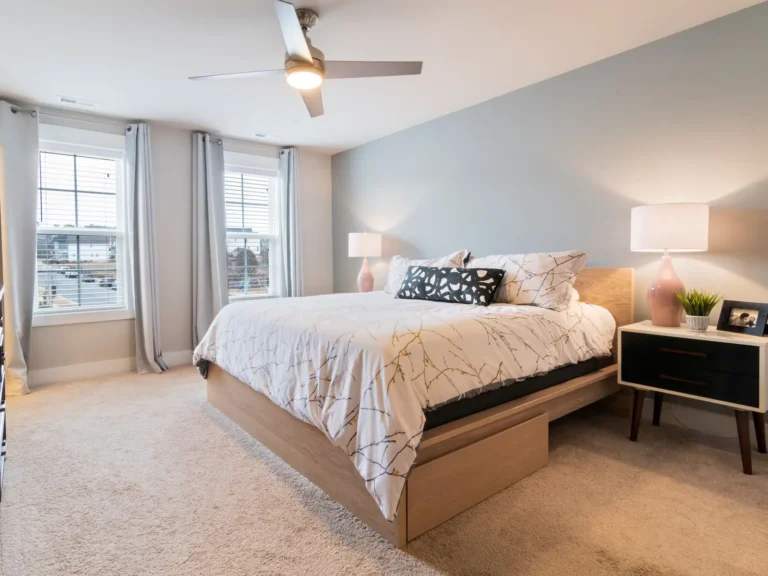
- Under the bed in the child’s room, if clearance allows. It keeps the system in one place and avoids a walk to the loft.
- A high cupboard or the top of a wardrobe, for boxes you do not want children opening unprompted.
- A cupboard in the living room or under the stairs, if that is where you play and you will actually fetch the box.
- The loft or garage, only for genuinely long-term “keep for later” toys, not for a two-week rotation.
Avoid spreading resting boxes across four different rooms. The friction of the hunt is what kills rotation.
When you are choosing the boxes themselves, see our guides to the best toy boxes for toddlers and IKEA TROFAST vs a plastic-bin toy organiser.
FAQs
How many toys should stay out in a rotation?
Enough for a normal afternoon, not enough to cover the floor. Two or three categories plus comfort toys is a realistic start in a small room. Increase only if tidy-up is still easy.
What are the best boxes for toy rotation?
Clear, lidded, stackable boxes in a size you can lift, with a label on the end. On our shortlist, a pack of 25 L clip-lid boxes is a practical everyday size, with a larger tough box for bulky sets.
How often should I rotate toys?
Every one or two weeks works for many families. Swap sooner if interest has dropped, later if a long project is underway. The storage should make either choice easy.
Does toy rotation work with a 12-bin organiser?
Yes. Use only some of the bins for the current set and keep the spare bins empty, or use them for books and art. The organiser is the “out” stage; the lidded boxes are the “resting” stage.
Should I hide the spare toys completely?
Out of sight is useful, but not so far away that you never fetch them. A labelled box under the bed beats a perfectly hidden box in the loft.